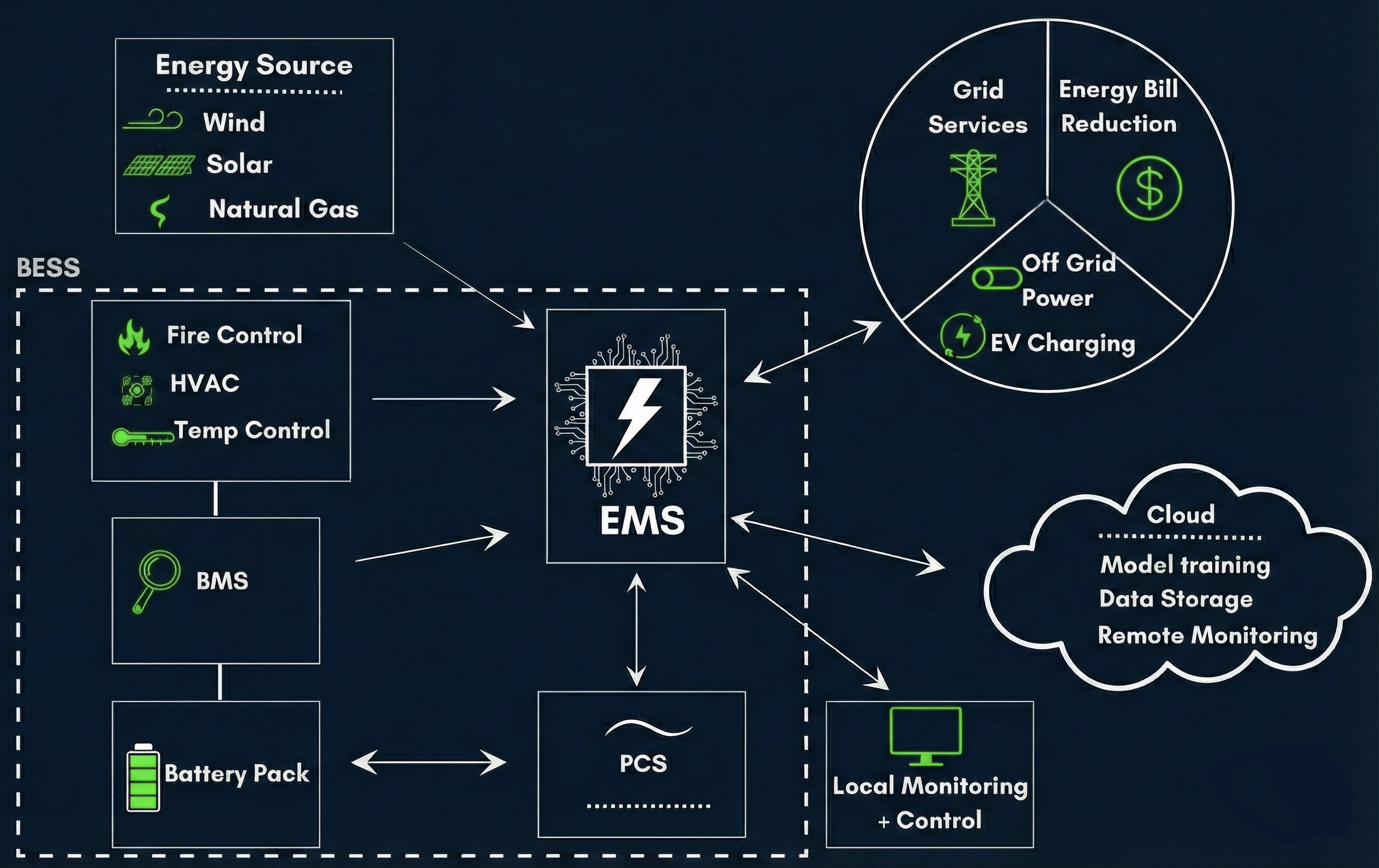
Demand charges can account for 30-50% of a commercial electricity bill. Peak shaving with battery storage is one of the most straightforward and reliable use cases for energy storage, and one of the easiest to model financially. Here's how it works and why it has become a cornerstone of commercial and industrial (C&I) energy storage economics.
What Are Demand Charges?
Demand charges are fees based on your highest power consumption (measured in kW) during a billing period, typically the single highest 15-minute average demand in a month. Unlike energy charges (which are based on total kWh consumed), demand charges penalize you for peak usage regardless of how brief that peak is.
For example, if your facility averages 200 kW but hits 500 kW for just 15 minutes during a billing period, you pay demand charges on the full 500 kW. That single spike can cost thousands of dollars per month.
How Peak Shaving Works
Peak shaving uses a battery energy storage system to reduce demand peaks. The battery charges during low-demand periods (typically overnight or during low-rate hours) and discharges during high-demand periods to reduce the facility's peak draw from the grid.
The process involves three steps:
Predict the peak: The storage EMS uses load forecasting to predict when demand peaks will occur, based on historical patterns, weather, occupancy, and other factors.
Pre-position the battery: The EMS ensures the battery is fully charged before predicted peak periods.
Shave the peak: When load rises above a target threshold, the battery discharges to offset excess demand, keeping the metered peak below the target.
How Much Can You Save?
Savings depend on your load profile, tariff structure, and battery size. Typical results include:
Demand charge reduction of 30-50% for facilities with sharp, predictable peaks
Monthly savings of $5,000-$50,000+ for large commercial and industrial facilities
Payback periods of 4-7 years depending on utility rates and incentive programs
Facilities with "peaky" load profiles, where maximum demand is significantly higher than average demand, see the best returns. Examples include manufacturing plants with large motors, data centers with cooling load spikes, and commercial buildings with high HVAC demand.
Why Load Forecasting Matters
Effective peak shaving requires accurate load forecasting. If the battery discharges too early, it may not have enough capacity when the actual peak occurs. If it discharges too late, the peak has already been set on the meter.
AI-driven load forecasting, like what WATTMORE's Intellect Operate uses, analyzes historical load patterns, weather forecasts, day-of-week trends, and seasonal variations to predict peaks with high accuracy. The storage EMS continuously adjusts its strategy as the day unfolds.
Stacking Peak Shaving with Other Value Streams
Peak shaving is often the foundation of a broader revenue stack. The same battery that shaves demand peaks can also provide:
TOU arbitrage: Charging during off-peak hours and discharging during peak rate periods
Solar self-consumption: Storing excess solar production for use during peak periods
Backup power: Providing critical load support during outages
Grid services: Participating in demand response programs for additional revenue
A good storage EMS optimizes across all these value streams simultaneously, not sequentially.
Getting Started
The first step in any peak shaving project is analyzing your load data. WATTMORE's Intellect PLAN tool can analyze your interval data and tariff structure to recommend the optimal battery size and project your savings. Contact us for a complimentary analysis.